पंडित कुमार गंधर्वांच्या बुलंद आवाजातली उठी उठी गोपाळा हि भूपाळी
एकेकाळचं गाजलेलं "डान्स सॉंग". मराठी शाळांच्या गॅदरिंग मध्ये ह्या गाण्यावर एखादा तरी ग्रुप डान्स हमखास असायचा. आज गोकुळात रंग खेळतो हरी, राधिके जरा जपून जा तुझ्या घरी
आणखी एक भूपाळी घनश्याम सुंदरा अरुणोदय झाला
राज कपूरच्या सत्यम शिवम सुंदरम मधलं यशोमती मैय्या से बोले नंदलाला राधा क्यू गोरी मै क्यू काला . श्रीकृष्ण आई यशोदेला विचारतो, राधा का गोरी आणि मी का काळा आणि ती त्याला काही छान कारणं सांगते, तू मध्यरात्रीच्या अंधारात जन्मलास म्हणून. राधेच्या काळ्या डोळ्यानी तुला भूरळ घातली म्हणून. (Young Shri Krishn asks mother Yashoda, why is Radha fair and I am dark. And she explains with so many reasons - because you were born at midnight, because you love Radha's dark, kohl lined eyes and so on)
गीत गाता चल मधलं सुंदर प्रेम गीत राधा का भी शाम हो तो मीरा का भी शाम
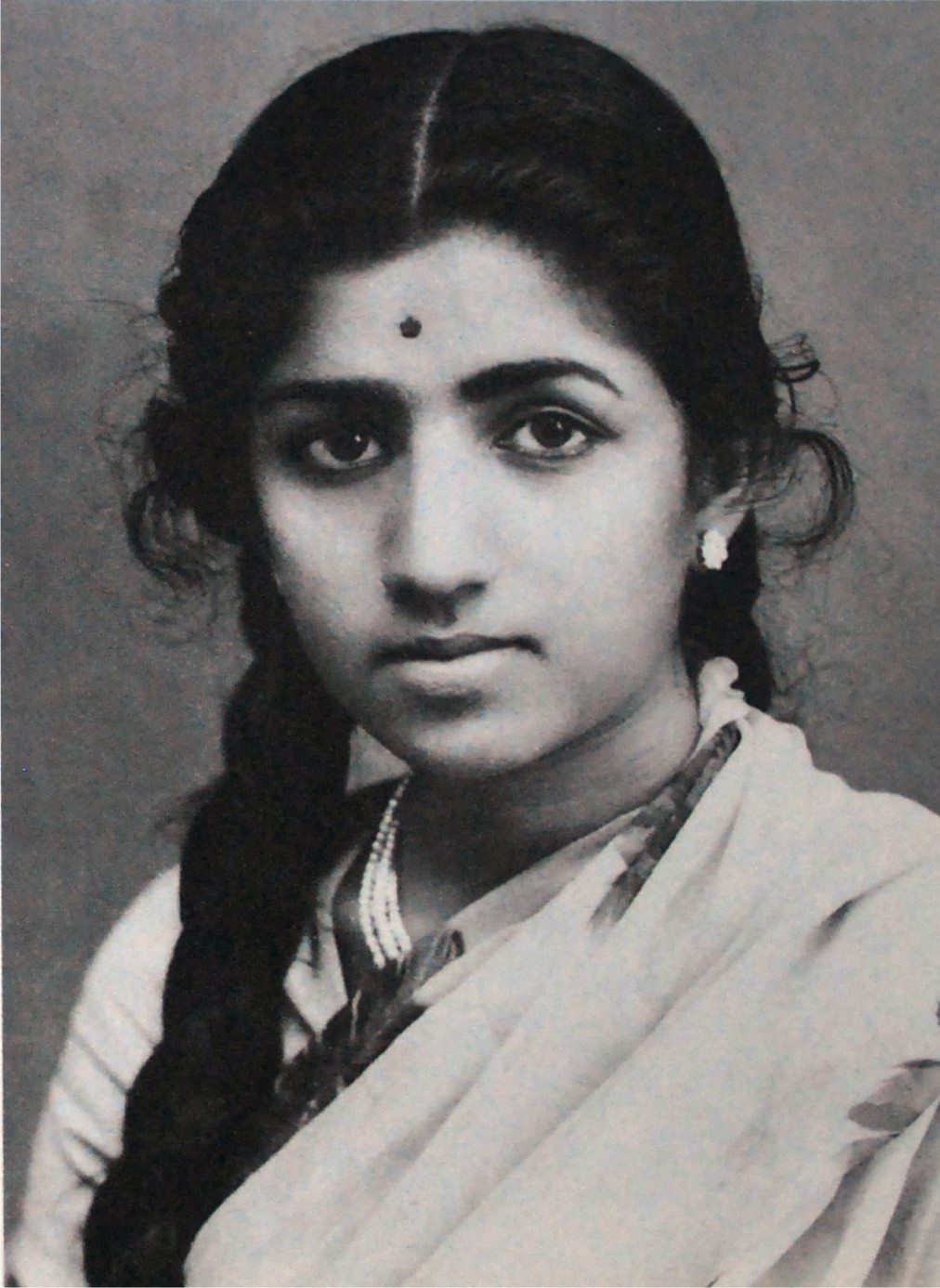
I was watching an old Lata Mangeshkar interview where she is reminiscing about her father, through his music.
The interviewer asks, "It is said that you have perfect gandhar in your voice and that is a gift from your father?".
And she explains what that means. She says, "the gandhar (ga in the seven notes) that a well-tuned tambora can produce, it is said that I can create the exact same sound with my voice." She then talks some more about who else had perfect gandhar in their voice or rather who else her father believed could create perfect gandhar (she names Bal Gandharva).
It is an old Doordarshan interview, I think - when there used to be a fly in residence in the Mumbai DD studio- (I remember that fly...being the subject of many viewers' letters, questions, and comments at the time) - and the air conditioning was probably malfunctioning, so you see her wiping her face with her handkerchief every now and then. But she speaks with grace and joy about her father and her younger days and there is no sadness or regret that comes across for the extreme hardships and struggle - financial and otherwise that we've heard her family went through while she and her siblings were growing up.
The story of the Mangeshkar family is very well known to maharashtrians: Dinanath Mangeshkar was born in Goa. He was an accomplished theater actor and singer of classical, semi-classical music. He had four daughters - Lata, Asha, Usha, Meena, and a son Hridaynath. Dinanath passed away when Lata was eleven - leaving his wife and children in penury and socially shunned. The responsibility of caring for the family then fell on Lata's young shoulders -she being the oldest child. Through grit, hard work and their father's gift of music, the siblings then raised themselves out of their difficult circumstances to climb the heights of unimaginable success in the world of music.
It is hard to put in words what maharashtrians feel about the Mangeshkars. They are a household name in the state. The two sisters are often referred to, publicly, as Latadidi and Ashatai - both the suffixes mean older sister (that's what they are called at home by their siblings , I believe). And maybe, although it isn't said openly, marathi -speakers are proud of the family for keeping the flag of marathi flying high for such a long time, in a film industry that is otherwise dominated by hindi- speaking people from the north.
Nevertheless, after receiving generous love from mumbaikars for decades, Latabai became the subject of their ire a few years ago. The Mangeshkar family lives on Pedder road in Mumbai. It is a very busy stretch of road that cuts through some wealthy residential neighborhoods of the city taking commuters, morning and evening, from their homes in north Mumbai to Nariman Point and other business enclaves in the south and back. Some years ago, LM was accused by the media of trying to use her exalted status to block the construction of a flyover that was proposed to ease the traffic congestion.
That furor has now passed. There is no flyover there- yet. And perhaps, one might argue, Pedder Road looks better without one. I don' know if LM still lives there. Some say she lives mostly in Pune now, where the family has built a hospital in memory of her father- the late Dinanath.
*Kalpavruksha Kanyesathi
How often did I hear the story behind the song above from my mother growing up? - Every single time it played on the radio. That it is an expression of Lata's feelings and gratitude toward her father (written by P. Savalaram). Roughly translated it says:
you planted the tree of music
for your daughter, baba
and left
it's blossomed now
will you come back to see
After you were gone
you were worshipped
when the seven notes came alive
your greatness became known
our home by the river
became pilgrimage
without you
(this) temple of riches is godless
sun and moon are your eyes
watching over from far
nothing is lacking now
it's raining good fortune
through your five fingers
you live on
come back just once
and pat our back
come back just once
*Kalpavruksha is a mythical, wish- granting tree. However, I don't think the poet would have meant it that way. So I translated it as the tree of music.
I am also not sure about the line - gangekathi ghar he apule - our home by the Ganga. I don't know which one of the Mangeshkar family's homes the poet was referring to. I vaguely remember reading somewhere that they lived in Sangli at one time which is by the river Krishna. But the home that might be construed as pilgrimage -visited by many admirers and temple of riches, I thought, would be their home in Mumbai on Peddar Road which is by the Arabian sea.
On the occasion of Maharashtra Diwas (May1), a few old marathi songs :
From the movie Mumbaicha Jawai ( Son -in- law from Mumbai) - the song ka re durawa ka re abola. In the movie, a small-town girl Durga, who has grown up in a wad (big sprawling old house) gets married to a boy from Mumbai and moves to the big city only to discover that her new home is two small cramped rooms in a tenement that she has to share with two other couples - her mother and father- in- law and elder sister and brother- in- law. She frets and fumes at the lack of privacy. Gently, with love and understanding her new family helps her adjust to her new surroundings.
Why wasn't the movie called Mumbaichi Soon ( Daughter -in -law of Mumbai) I wonder, as the story is more about the girl and her in- laws than her husband and his in -laws. Durga's sister - in -law Manju is singing the song in the above clip. The words - ka re abola simply mean - why aren't you talking to me?
Are sansar sansar is a poem by Bahinabai Choudhary that was used as song in the movie Manini. Bahinabai (1880 - 1951) was an illiterate village woman who composed poetry orally while performing her daily chores, in the farm as well as at home. They were later written down by her son Sopandev. In school we learned one of her poems called mana wadhay wadhay. It is a beautiful poem about this mysterious thing called the mind. In it Bahinabai says mind is like a bird -one minute it is on earth and next minute it is soaring high in the sky; mind is like the waves created on water by the wind and mind can be deadly poison worse than the venom of snake or scorpio. At the end of the poem she asks rhetorically - god, how did you come up with this thing and answers her own question saying it must be something you day -dreamed about. In are sansar sansar, Bahinabai compares sansar - domestic life - to a hot griddle on the stove. You burn your hand first she says before you get to eat the bhakari.
Bhakari eaten with raw onion, fresh green chillies or a simple spicy chutney is the staple food of rural Maharashtra. Cooked without any fat - no oil, no ghee- it is probably one of the healthiest flat breads - especially if you make it the way it is shown in the song: Take some jwari or bajari grown in your own farm; grind it on the jata (grinding wheel) to make just enough flour to last for a week or two; knead the dough with water and flatten a small ball by hand to make a big thin round bhakari; Cook it on earthen stove.
This song jeevanat hee ghadi reminds me of a phrase my mother used to use: sadichi ghadi modayachi. New sarees especially cottons and silks come crisply folded. Sometimes when my mom bought a new saree, she would not wear it right away but save it for a special occasion or an auspicious day saying, "padvyala navin sadichi ghadi modin"- I'll break the fold of my new sari on Padwa. The first line in the above song says jeevanat hee ghadi asheech rahu de- let the fold of my life remain intact.
The handwoven silk sadi that is the pride of Maharashtra is of course the paithani named after the village Paithan near Aurangabad where they are made. The Wikipedia entry for Paithani says, one of the characteristics of that sadi is the motif of peacock woven in golden thread on its padar (part of the sadi that drapes over the shoulder). In the above song in the first line a girl is asking her aai (mother) to dress her in a new shalu (rich sadi) with dancing golden peacock on its padar. I wonder if poetically, she is in effect asking her mother for a paithani - an extravagant purchase at any age let alone for a young girl. This song is a lavani, a type of folk song from Maharashtra and is sung by Sulochna Chavan, a well known lavani singer.
No list of marathi popular songs can be complete without the above song. It would not be an exaggeration to say that generations of maharshtrian children have taken their first steps tapping their feet to the beat of this balgeet. The first line says nach re mora ambyachya vanat nach re mora nach - dance peacock dance in the mango orchard. Asha Bhosale originally sang this for the movie Devbappa over 50 years ago. Everyone knows that the Mangeshkar sisters Lata and Asha, through their sweet, melodious voice ruled the hindi playback signing world for over five decades. What is probably lesser known outside Maharashtra is that their brother Hridyanath Mangeshkar has rendered some deeply haunting soulful marathi songs like the one below: